Computer vision for livestock.
ProMeadow identifies, counts, and watches cattle and sheep, and checks the work around them, from the paddock to the processing floor.
Inside the industry, at the cutting edge: in trial with Australian red meat processors and the industry's own research and development body.
From the paddock to the pack.
Cameras where the work already happens. Nothing fitted to the animals, nothing in the way.
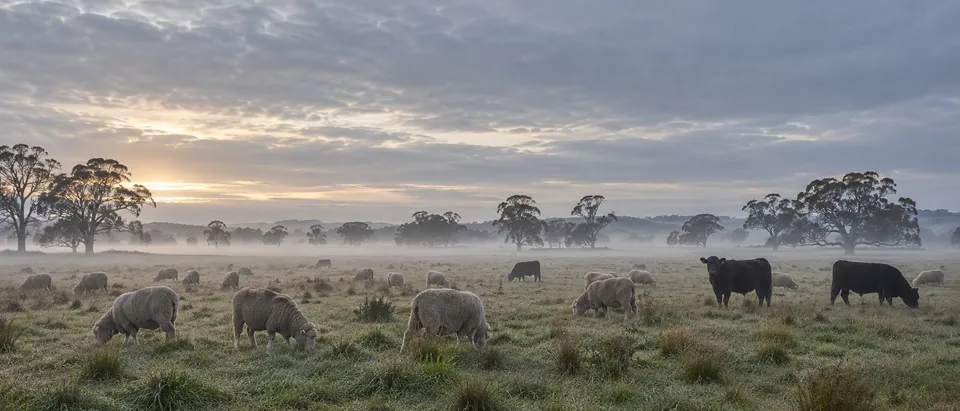
01The paddock
Every animal known by sight, with no tag to read or lose.
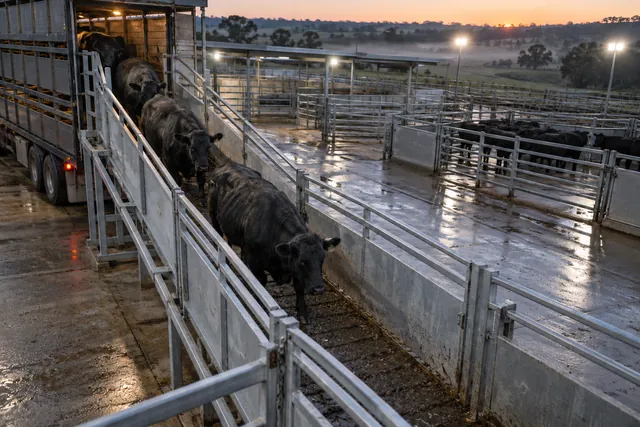
02The ramp
Counted off the truck and matched to the consignment.
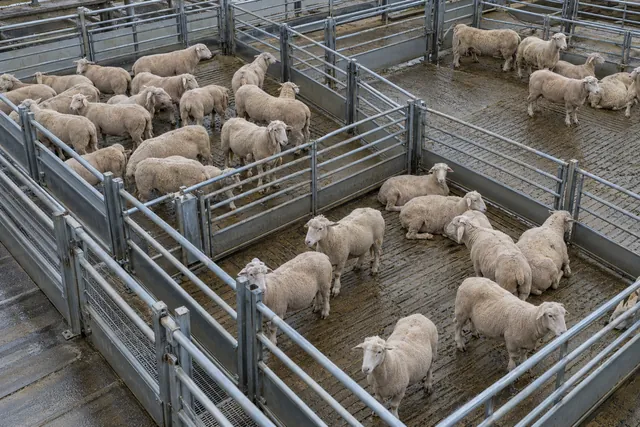
03The pens
Watched while they wait: down, stuck, or waiting too long.
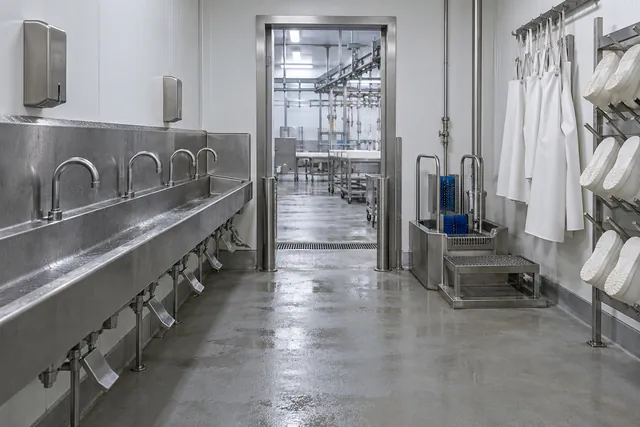
04The anteroom
Every hygiene step, in order, for long enough.
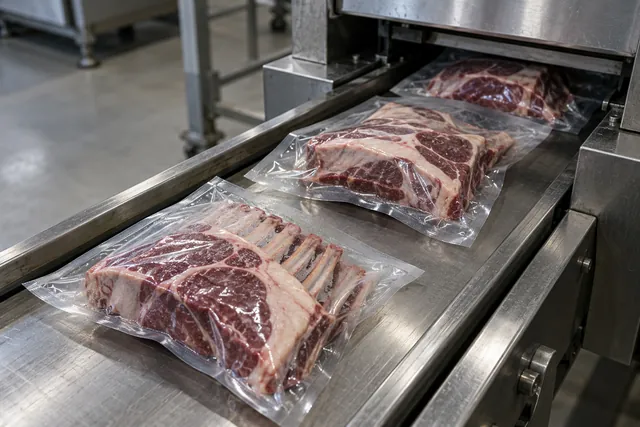
05The packer
Every pack checked at the seal, before it becomes rework.


What it watches.
One system of cameras and models, across the animals and the places they pass through.
The animals
Identity and tracking
Knows each animal by its face and muzzle, cattle and sheep, with no tag to read or lose. Follows each one as the mob bunches, splits, and turns.
Counting and verification
Counts at the ramp, race, or pen exit and checks the total against the consignment and the RFID reads. A gap shows where it opened.
Weight and condition
Liveweight and body condition from the camera, with no scale and no crush, every time an animal walks past.
Health and welfare
Flags an animal that's down, stuck, or slipping, and early signs of illness or lameness in its face and gait.
The plant
Anteroom hygiene
Checks every step of the hygiene route, in order and for long enough. It checks the steps, not who took them.
Vacuum packaging
Watches the infeed, the seal, and the outfeed. Flags a pack before it becomes rework or downtime.
Flow and blockages
Sees product and carcases building up, and warns while there's still time to clear it.
One feed for the whole floor.
Every camera reports to one place. The right person hears in time to act, and every event keeps its footage.
- Live alerts or a daily review, chosen area by area
- Every event with the clip that shows it
- Counts reconciled against your consignments and RFID reads
- Ramp 2412 counted. Matches the consignment.
- Race 3Animal turned back. Counted once.
- AnteroomBoot wash skipped. Supervisor told.
- Packer 1Seal fault at the outfeed. Pack pulled.
- Ramp 1386 counted. Two short of the consignment.
It starts with knowing which animal is which.
Most vision counts shapes. ProMeadow knows each animal by its face and muzzle, so one that turns back in the race is counted once, and the steer at the ramp is the same steer in the pen.

- Counted
- 24
- Turned back, counted once
- 1
- Cattle and sheep, across breeds and solid colours
- No tags to fit, read, or lose
- Each identity held through a crowded race
We own the stack.
Most vision in agriculture is a general model on a compressed stream from whatever camera is already there. ProMeadow specifies the hardware for each site, then builds every layer above it, from the raw frame to the answer, tuned for livestock.
- 01Cameras
High-resolution, high-frame-rate global shutter cameras with short exposures, and lenses to match, specified for each site, so a moving animal is sharp in every frame.
- 02Compute
GPUs sized to each site's cameras, on site, in the cloud, or both. Every frame is captured raw or lossless and processed in near real time, so you get answers fast.
- 03Capture
Raw frames straight off the sensor, every setting under our control, compression included, and kept to a minimum. Debayered in our own GPU pipeline, fast and frame-accurate across every camera.
- 04Geometry
Every camera's intrinsics and extrinsics calibrated, then triangulated with its neighbours, so an animal two cameras see is one animal, measured in the real world, not in pixels.
- 05Models
Our own detection, pose estimation, segmentation, and action recognition models, trained on livestock and the work around them, not on general-purpose datasets.
- 06Understanding
Which animal it is, where it has been, and what just happened: tracked, re-identified, and tagged as events the right person can act on.
What a typical stream loses
A camera stream is sized down to save bandwidth and compressed hard, and what it loses, no model can put back. We keep the frame as the sensor saw it, compressed as little as possible.


How a pilot works.
Set up around your site, and proved against your own records before anyone relies on it.
- 01
We visit
We photograph and measure the areas you choose and find mounting points, power, and data. Then we agree what to tackle first.
- 02
We plan the cameras
Positions, views, and equipment for each area, with a costing, so you know what goes where before anything is installed.
- 03
We prove it against your records
Counts are checked against your manual tallies, RFID reads, and your own systems. Your reviewer confirms what it flags.
- 04
It goes live
Alerts reach the right person in time to act, or events wait for a daily review. You choose, area by area.
Site visits are led by people who know the industry, not just the cameras.
Today, and with ProMeadow.
| What | Today | With ProMeadow |
|---|---|---|
| Head counts | Tallied by hand, reconciled later | Counted on camera as they unload, matched to the consignment |
| Discrepancies | Found at the end of the day, if at all | Shown where and when they happened, with the footage |
| Welfare | Seen when someone walks past | Watched throughout, with the right person told |
| Hygiene | Signed off on trust | Every step checked, in order |
| Pack faults | Found at rework | Flagged at the seal |
| Audit evidence | Paper and memory | A log of every event, with its footage |
Start with a site visit.
One visit shows whether ProMeadow fits your site, and what it would take.
- Photos and measurements of each area you choose
- Camera positions, views, and equipment
- Power, data, and installation needs, worked through with your maintenance and IT teams
- A costed pilot proposal